Why aren’t we all Egalitarians?

It appears there are not as many Egalitarians in the UK as New Labour might like to think.

Research by the Joseph Rowntree Foundation, commissioned by the Fabian Society, seems to show that people in England aren’t particularly keen on equality. They think high income earners deserve their level of wealth, and conversely, low income earners also deserve theirs. High pay is seen as the result of hard work and talent and high income earners are seen as making an economic contribution to the nation. People ‘underestimate the number of rich tax cheats’ and ‘exaggerate the number of benefit cheats’ (Ashley, 2009: 27). Only 22% are traditional egalitarians. In what sense is this a problem? Continue reading Why aren’t we all Egalitarians?

A visual summary of Grid-group cultural theory

Service designer Nick Marsh has created a nice visual summary (of Matthew Taylor’s summary) of grid-group cultural theory

Nick writes:

The really interesting thing about this way of looking at culture is that it provides us with an off balance, high tension way of thinking about competing agendas and arguments in situations where there is no ‘right’ solution, only better or worse outcomes for different groups (sometimes referred to as Wicked Problems within the design community.)…
Cultural Theory is thus a tool to be used when tackling problems, more than a theory to explain a situation, and this is the appeal for me as a service designer – I’m always looking for ways to frame the often complex and contradictory problems I come across during my work, and Cultural Theory is an inspiring, thought provoking method of viewing these issues. I’m looking forward to reading more about it…

Do Egalitarians need Spirituality?

A thoughtful review by Graham Strouts of David Holmgren’s new book, Future Scenarios appears at his website, Zone 5.

This provides an interesting angle on the predeliction of Egalitarian thinkers to foreground the need for a ‘reorientation of spiritual values’ or a ‘fundamental change of paradigm’. Note that while Holmgren himself is clear that under certain scenarios such social changes are essential, not every Egalitarian is in agreement. One of the issues with advocating a return to spirituality is the question, Which spirituality? Continue reading Do Egalitarians need Spirituality?

On the Meaning of Culture

Grid-Group Cultural Theory is an uncomfortable thing to live with. It claims that our rationality is partial rather than complete. Instead of one version of common sense, which sensible people have and stupid people ignore, there are actually four competing versions of rationality, four different takes on the way the world actually is. Although we are quite flexible, we spend much of our time stuck inside one or other of these four boxes, unable or unwilling to see anything beyond the walls of the box.

In The Meaning of Culture (1929) John Cowper Powys wrote:

Culture is what is left over after you have forgotten all you have definitely set out to learn…One always feels that a merely educated man holds his philosophical views as if they were so many pennies in his pocket. They are separate from his life. Whereas with a cultured man there is no gap or lacuna between his opinions and his life. Both are dominated by the same organic, inevitable fatality. They are what he is.

Technology publisher Tim O’Reilly sees this as a strength, since it’s part of what gives an individual or an organisation a personality.

“Great companies always have this sense of authenticity, while “me too” companies have a culture made up of the latest management fashions.”

But it can also be a great weakness. Having matched one’s opinions to one’s life and one’s life to one’s opinions it then becomes next to impossible to see the life that exists beyond the opinions, or the opinions that exist beyond the life.

Powys nicely put his finger on exactly the point that Cultural theory seeks to expose: the point at which we abandon our ideas of opinion or philosophy and resort to the claim that ‘this is how the world really is’.

Cultural theory might therefore be regarded as an antidote to cultural inevitability, because it claims that no matter how comprehensive a particular cultural milieu appears to those on the inside, three quarters of the world is always on the outside, waiting to be discovered. Furthermore, it provides a map for navigating this expansive, meta-cultural territory. And like all maps it confronts us with a crucial question: is this organic or is it constructed?

Now read:
A way of trying not to fool yourself

Mapping four-fold conceptual schemes onto Grid-Group Cultural Theory

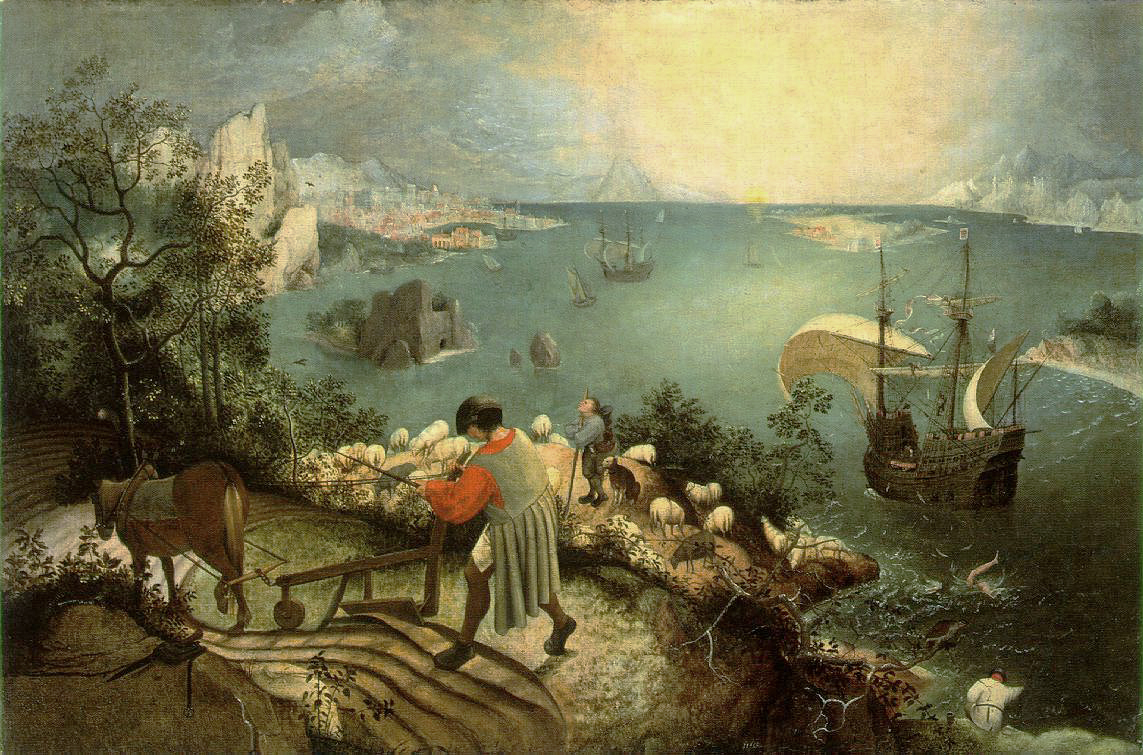
Bruegel,_Pieter_de_Oude_-_De_val_van_icarus_-_hi_res Over the last three decades Grid-group cultural theory, first devised by anthropologist Mary Douglas, has been used in a wide variety of disciplines. Here’s an example by David Low from 2008 of its use as:

‘a heuristic structure through which to view the diversity of university-community engagement and create shared understandings of the appropriateness of a wide range of possible engagement methods’.

What’s innovative about this is that it relates the four quadrants of grid-group analysis to the philosopher Charles S. Peirce’s ‘four methods of enquiry’.

But… as with most of these attempts at mapping two different conceptual schemes on to one another, I find myself questioning the methodological basis on which this is being done. Continue reading Mapping four-fold conceptual schemes onto Grid-Group Cultural Theory

The Four Cultures of Administrative Justice

New article : A Cultural Analysis of Administrative Justice

This chapter from an upcoming book is a thoughtful take on the mismatch between contemporary concepts of public management and the theories of administrative justice that they intersect with.

It’s a good example of the usefulness of Grid-Group Cultural Theory to make sense of the social. The authors are specific: in their view Cultural Theory “promises two significant advances to the theory of administrative justice. First, Continue reading The Four Cultures of Administrative Justice

Niche construction: what does it tell us about culture?

Meika recently posted a comment on this site, highlighting the concept of niche construction as a driver of evolution.
I found it fascinating, which, partly is why it’s taken me so long to respond. (The other reason is a total computer melt down). Anyway, I’m intrigued with the niche construction material, which I hadn’t come across. I’d agree with the authors of the book that this area is worthy of greater study, but can’t help wondering whether it really does constitute a new way of looking at evolution… Continue reading Niche construction: what does it tell us about culture?

‘I think we won’: Mary Douglas Interview

Mary Douglas, anthropologist and originator of what became grid-group cultural theory, was interviewed in 2006 by Cambridge anthropologist Alan MacFarlane. An annotated video is part of a large series of fascinating interviews he has conducted over many years. Exerpts are posted at Youtube (see below),  The long version is worth watching to find out what illness Mary Douglas had when she wrote Purity and Danger. At the start of Part 2 she describes the influence of Basil Bernstein on the ideas behind Natural Symbols. She suggests that, following Bernstein, hierarchical social arrangements should perhaps be termed ‘positional’. Of her work with Aaron Wildavsky on risk  she says, “I think we won”.

Never let a crisis go to waste

What Rahm Emanuel actually said towards the end of 2008 was:

“You don’t ever want a crisis to go to waste; it’s an opportunity to do important things that you would otherwise avoid.” (Source)

From the perspective of the Four Cultures, a crisis is a point of inflection in the discourse of meaning. It’s a moment when, not knowing what to say, we construct our timeless arguments anew, using fresh building blocks to establish…  the same design as before.

The attack on the World Trade Center, the global financial crisis, the Bushfires in Victoria, Australia, and now the flu pandemic – all these are opportunities for us to establish rhetorically and institutionally our own partial and partisan versions of how the world really works. No matter what the issue, the response always takes one of four competing approaches:

  • Egalitarian
  • Individualist
  • Hierarchical
  • Fatalist

Left to themselves each cultural bias will try to take over, each will aspire to be the only answer in town (as Margaret Thatcher liked to say, ‘There is no alternative’). This goes a long way towards explaining the puzzling of how making it better so often ends up making it very much worse.

That’s why it’s so important to become aware of them, to get wise, to challenge the pervasive and pervasively wrong idea that there’s only one rationality and to learn how to articulate coalitions between the four cultures, so that everyone gets some of what they wanted.

The solution is grid-group cultural theory. Now, what was the problem?

(NB. For anyone who has trouble spotting irony, that last sentence was some)

What to read next:

The Ground Zero of Meaning;

Making sense of the bushfires

On the relationship between behaviour and context in Cultural Theory

In reply to Matthew Taylor’s  question over at his RSA blog:

“how can it be true both that there are some social environments which encourage particular attitudes and behaviours (which could be said broadly to fit an egalitarian outlook) while, at the same time, in relation to any specific problem or decision, a set of conflicting responses (of which egalitarianism is only one) will emerge?”

1) Scale is crucial. Just as there isn’t a single rationality but four, neither is there a single scale. At one scale of operation, one of the four cultures may be dominant, and may seem to be a good fit with the landscape, but at other scales other cultural biases may be a better fit. See the work of ecologist Buzz Holling on this.

2) Similarly, time is also crucial. The social-ecological model of Holling and others in the Resilience Alliance suggests that ecological succession has a social counterpart. What appears optimal at one moment will become less optimal as time changes the environment, so that alternative problems arise, leading to alternative solutions and alternative institutions.

3) The ability to defect is also crucial. I have been quite taken with a cellular automata problem called the density classification problem. In short this seems to suggest that even in simple mechanistic systems, total knowledge is impossible. This means there is always room for the dominant answers to be wrong and for defectors from the main view to get it more nearly correct. Given that a) social-ecological systems are far more complex than cellular automata and b) evolution has fine-tuned human responses to problem solving, it seems possible that human society is an environment which rewards a dominant viewpoint without punishing too severely a minority of dissidents.