On the Meaning of Culture

Grid-Group Cultural Theory is an uncomfortable thing to live with. It claims that our rationality is partial rather than complete. Instead of one version of common sense, which sensible people have and stupid people ignore, there are actually four competing versions of rationality, four different takes on the way the world actually is. Although we are quite flexible, we spend much of our time stuck inside one or other of these four boxes, unable or unwilling to see anything beyond the walls of the box.

In The Meaning of Culture (1929) John Cowper Powys wrote:

Culture is what is left over after you have forgotten all you have definitely set out to learn…One always feels that a merely educated man holds his philosophical views as if they were so many pennies in his pocket. They are separate from his life. Whereas with a cultured man there is no gap or lacuna between his opinions and his life. Both are dominated by the same organic, inevitable fatality. They are what he is.

Technology publisher Tim O’Reilly sees this as a strength, since it’s part of what gives an individual or an organisation a personality.

“Great companies always have this sense of authenticity, while “me too” companies have a culture made up of the latest management fashions.”

But it can also be a great weakness. Having matched one’s opinions to one’s life and one’s life to one’s opinions it then becomes next to impossible to see the life that exists beyond the opinions, or the opinions that exist beyond the life.

Powys nicely put his finger on exactly the point that Cultural theory seeks to expose: the point at which we abandon our ideas of opinion or philosophy and resort to the claim that ‘this is how the world really is’.

Cultural theory might therefore be regarded as an antidote to cultural inevitability, because it claims that no matter how comprehensive a particular cultural milieu appears to those on the inside, three quarters of the world is always on the outside, waiting to be discovered. Furthermore, it provides a map for navigating this expansive, meta-cultural territory. And like all maps it confronts us with a crucial question: is this organic or is it constructed?

Now read:
A way of trying not to fool yourself

Characterising the Open Source Movement: It’s not the ‘new socialism’

Just as I reach the end of reading Rebel Code by Glyn Moody , a riveting (to my mind) early history of GNU/Linux (subtitled Linux and the Open Source Revolution), Kevin Kelly’s article in Wired mag comes to my attention. Kelly claims the open source movement is ‘the new socialism’.

No, it isn’t.

For example, there is no way on God’s earth that Continue reading Characterising the Open Source Movement: It’s not the ‘new socialism’

Mapping four-fold conceptual schemes onto Grid-Group Cultural Theory

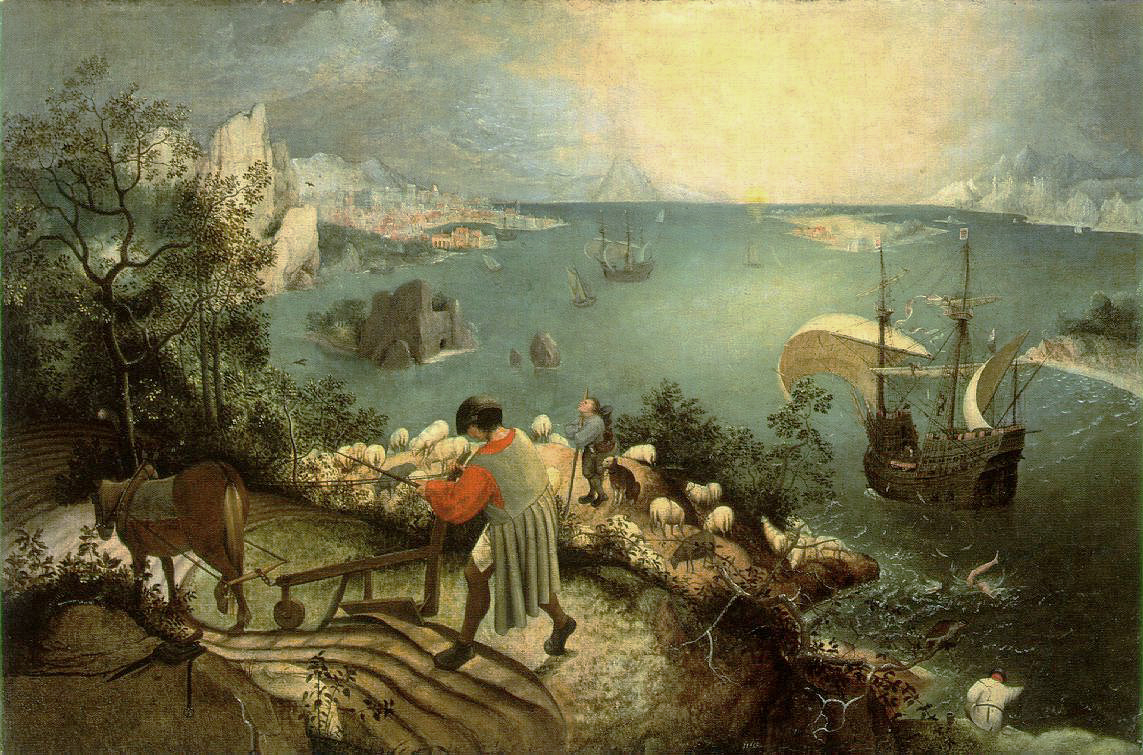
Bruegel,_Pieter_de_Oude_-_De_val_van_icarus_-_hi_res Over the last three decades Grid-group cultural theory, first devised by anthropologist Mary Douglas, has been used in a wide variety of disciplines. Here’s an example by David Low from 2008 of its use as:

‘a heuristic structure through which to view the diversity of university-community engagement and create shared understandings of the appropriateness of a wide range of possible engagement methods’.

What’s innovative about this is that it relates the four quadrants of grid-group analysis to the philosopher Charles S. Peirce’s ‘four methods of enquiry’.

But… as with most of these attempts at mapping two different conceptual schemes on to one another, I find myself questioning the methodological basis on which this is being done. Continue reading Mapping four-fold conceptual schemes onto Grid-Group Cultural Theory

Beyond Enclaves in Palestine (Part 4)

In this series about planning in Palestine we’ve looked at three alternative ‘plans’. The first, thankfully, will never be built (although, chillingly, it’s really just a vision of present segregated reality). The second may well be built (though it would take a dramatic turnaround in political will). The third offers a glimpse of a progress-free future where nothing gets built (which is wholly unrealistic, given large population increases in the next 20 years).

These three visions of a future Palestine raise some important political questions and they show how spatial planning can focus the political process on actually getting things done. Here are some of the issues: Continue reading Beyond Enclaves in Palestine (Part 4)

Beyond Enclaves in Palestine (Part 3)

What future can be planned for Palestine?

So far in this series we’ve looked at a nightmare sci-fi segregationalism generated merely from revealing the implications of the Oslo Accords as architectural impressions. We’ve also looked at a much more positive  spatial plan to develop a central north-south transit corridor, linking most of the main settlements and directing future urban growth without sprawl. The architectural student, the leading planner, what, thirdly,  would an artist have to offer in terms of a vision for Palestine? Continue reading Beyond Enclaves in Palestine (Part 3)

Beyond Enclaves in Palestine (Part 2)

arcI’m examining three very different visions of a planned future for Palestine in a week when the issue has been very much in the news. Of the Israel-Palestine conflict, Desmond Tutu said this week:

“you can give up on all other problems. You can give up on nuclear disarmament, you can give up on ever winning a war against terror, you can give it up. You can give up any hope of our faiths ever working really amicably and in a friendly way together. This, this, this is the problem, and it is in our hands”.

And US President Obama said: “I think it is important not to assume the worst but to assume the best.”

The first part of this series looked at a very dark vision for the future of the West Bank. The second plan I’m examining here certainly ‘assumes the best’ as Obama puts it. Continue reading Beyond Enclaves in Palestine (Part 2)

The Four Cultures of Administrative Justice

New article : A Cultural Analysis of Administrative Justice

This chapter from an upcoming book is a thoughtful take on the mismatch between contemporary concepts of public management and the theories of administrative justice that they intersect with.

It’s a good example of the usefulness of Grid-Group Cultural Theory to make sense of the social. The authors are specific: in their view Cultural Theory “promises two significant advances to the theory of administrative justice. First, Continue reading The Four Cultures of Administrative Justice

On The Age of the Unthinkable

Some of what journalist Joshua Cooper Ramo seems to be suggesting in his book The Age of the Unthinkable is already happening at a local level. Inspired by the science of social-ecological resilience, many communities around the world are adopting strategies of transition- from oil-dependent unsustainability to something more, well, resilient.

Some of this might trickle up to national and international institutions. Long term energy supply insecurity, coupled with climate change uncertainty make it very unlikely the world in even 20 years time will be much like it is now. But since we can’t really see into the future without getting it significantly wrong, it makes more sense to plan for multiple futures, and that means we need built-in redundancy to counterbalance over-brittle efficiency.

Two further contributions to this discussion: Continue reading On The Age of the Unthinkable

Beyond enclaves in Palestine: Constructing the physical reality of territorial integrity (Part 1)

I’ve been struck recently by three somewhat contrasting visions of physical development for a future Palestine.

Palestine. Perhaps nowhere else on earth has the philosophy of space been so consistently conceived as a weapon.

The sophistication of the manipulation of space for military and political purposes in the West Bank and Gaza has made the Berlin Wall and the DMZ look dumb by comparison, and the East/West Belfast sectarian divide seem distinctly amateur. Israel has pursued a policy of redefining its own spatial limitations by ‘walking through walls’ at the same time as constraining the movement of others by establishing new spatial limits ‘seam-line obstacles’ and ‘depth barriers’, contesting both below and above in what architect Eyal Weizman has called a ‘Hollow Land’. Continue reading Beyond enclaves in Palestine: Constructing the physical reality of territorial integrity (Part 1)