The Google Dilemma, Part 2

What kinds of organisations require there to be nations, complete with identifiable and distinctive national characteristics? In the past we knew we’d traveled because the people around us spoke a different language, or wore different clothes and ate different food. But these differences were often more regional than national.  For many purposes, that’s not enough. Isn’t there something about a nation’s respect for authority, or its approach to gender differences, or view of time – the long-term and the short term? What kinds of circumstance would lead to a need for greater categorization of national differences?

Hierarchical, Individualist and Egalitarian: contested views of nationhood

The very concept of the unified territory is strongly Hierarchical in origin (specifically, it is ‘strong grid’) – it is the king who unites the nation, under God. And it is the king whose task it is to demonstrate by conquest that in the divinely ordained hierarchy of nations, his nation ranks first. The early nation state is really an extension of the power of the monarchy. The modern version of this, that political legitimacy derives from a people, underpins the modern bureaucratic nation state, characterised by a cascade of checks and balances and a distinctly poor track record at making binding international agreements that don’t merely reinforce the established league-table of nations. Such institutions as monarchies and parliaments will be likely to attempt to naturalise national identity by identifying ‘innate’ national characteristics and establishing institutions that are ‘national’. [A national football team is a construction from the late 19th Century; supporting it is supposed to come naturally]. Every international gathering or institution is an opportunity to assert national supremacy.

The idea that national characteristics are to be ignored, or don’t exist, or are constructed, and not natural, is an anti-hierarchical one (specifically, ‘weak grid’). A non-hierarchical approach will regard evidence of national cultures not as information to be acted on but as noise to be filtered out and ignored.

There are two distinct versions of this filtering out of national difference. Continue reading The Google Dilemma, Part 2

Are the guardians of national boundaries beginning to look pathetic?

Golden Genie by Phototacular/Flickr

Commenting on the post about the Google Dilemma, The Other Gardener said:

“There is very little that can be said to be “essential about national boundaries” now that the genie is out of the lamp. I think the guardians of these boundaries, including the academics, will always lag behind. They are already beginning to look pathetic. The nation, as they used to say, ain’t got a chance.”

Well, that’s my suspicion too, but I’m not sure what Genie has escaped. Do we really look less divided-by-nation than we did, say in the colonial period, when there were far fewer nation states? Interesting that in the last 60 years nation states have proliferated, while some other markers of nationality, particularly languages, have collapsed and died. The concept of the nation is certainly shifting, but seemingly not going away. In many respects the concept of national boundaries has become firmer, more worried over,  than at any time since WWII.

In defence of those lagging academics, they’ve been talking about ‘globalization’ for decades. Also: world risk society (Beck), world-society (Luhmann), world systems theory (Wallerstein), world polity (Meyer), the Cosmopolitan Condition (Beck again, who mentions all these) and on and on.  Academics keep announcing the transformation of the nation concept, and the nation just keeps reinventing itself.

One way of conceptualising the rift between Google and the Chinese Government might be to look at it in relation to terms used by John Urry (and Manuel Castells’):  regions, networks, scapes and flows. Here a regional configuration (China) is renegotiating its influence when engaged with a network configuration (Google/ the Internet). Or perhaps, it is rather that one region/network (the US/Google) is being disrupted by another region/network (China/security attacks) in terms of disrupting flows (censorship, spying, denial of service attacks etc). To use Urry’s terms, internal Chinese dissent might be seen as a kind of fluid that the scape of the Internet, with Google as a significant node attempting to be a hub, makes global. Either way, it seems the traditional nation-based regional version of power politics (in this case between the US and China) is being disrupted and re-configured by the emergence of new networks, with new nodes and new kinds of fluids with new kinds of flows.

Like that genie escaping from the lamp, these flows are unexpected and exceedingly hard to contain.

Thanks for the comment. Look out for the next installment, in which we’ll consider which kinds of cultural bias might favour nations and nationhood –  and which might not.

Image: Golden Genie by Phototacular/Flickr

The Google Dilemma. National Differences and Cross-Cultural Theory

“Good enough for our transatlantic friends … but unworthy of the attentions of practical or scientific men.”

Good enough for our transatlantic friends?

This was the verdict of a British Parliamentary Committee , on the implications of Thomas Edison’s new electric lamp, which had been patented in the US in 1879.

In the gloom of the gas-light they couldn’t see the significance of Edison’s invention. But equally they misunderstood national differences. If the lamp was ‘good enough’ for American use, why would that change just by crossing an ocean? And if it really had no ‘practical or scientific’ worth, why wouldn’t practical or scientific Americans be able to spot that flaw just as well as their British counterparts?

I’m exploring differences across national boundaries, specifically with reference to Geert Hofstede’s Cross-Cultural Theory, which is explored most fully in his book, Cultures and Organizations. Software of the Mind. I’m doing so to try to discover whether the recent argument between Google and the Chinese Government on censorship comes down to cultural misunderstanding, or something else.

Continue reading The Google Dilemma. National Differences and Cross-Cultural Theory

Why can’t environmentalists just all get along?

Dr Clare Saunders, from Southampton University, was awarded the first British Journal of Sociology prize for her 2008 ethnographic work on environmental organisations in London.

You can hear a podcast of her describing her research, and read the original article (as long as someone you love your institution subscribes to Wiley Interscience).

She argues that: Continue reading Why can’t environmentalists just all get along?

Cultural bias and the HPV vaccine

Health communicators need to be able to handle… political issues skilfully and they need the training and tools to do so. Otherwise, their health messages run the risk of being ignored in a storm of political outrage. (Abraham 2009)

Prof Dan Kahan at the Yale Cultural Cognition project has been involved in work on cultural influences in the public debate about the HPV vaccine. For many the HPV vaccine will save lives and improve health, while providing strong returns for the manufacturers. For others, though, jabs are just risky or even downright dangerous.  For yet others, in providing the vaccine to teenagers there is an implicit condoning of promiscuity. Whichever it is, the scientific evidence seems to fuel a political debate.  Sales of Gardasil, says the Wall St Journal “have slowed over the past two years, as Merck has encountered difficulty persuading women ages 19 to 26 to get the shot.”

The Cultural Cogniton project is investigating just how people come to their beliefs about scientific evidence.

Some really interesting results: Continue reading Cultural bias and the HPV vaccine

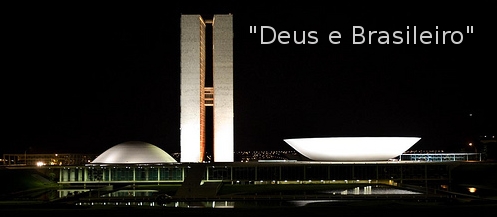
“God is a Brazilian” – risk perception in Brazil

Brasilia by night: Flickr - babasteve

John Adams of Imperial College London produced  a new preface for the Brazilian translation of his important  book Risk. His very interesting analysis of the social construction of risk is strongly informed by Grid-group cultural theory:

“I have been increasingly impressed by the ability of cultural theory to bring a modicum of order and civility to debates about risk. It is not a typology for pigeonholing participants in debates about risk. Occasionally one encounters a pure type, but most of us are too complex and multi faceted to be captured by a simple label. It does however provide a useful framework and vocabulary for describing the attitudes encountered in discussions about the best way to approach an uncertain future. It helps people to introspect about their own biases and prejudices.”

You can read the whole preface at John Adams’ web site.

Click to access deus-e-brasileiro1.pdf

Stewart Brand: Four sides to climate change – but which four?

Credit: D Sharon PruittStewart Brand (whom, incidentally, we have to thank for the ‘whole earth’ photo at the Fourcultures masthead) wrote an op-ed recently in which he identified four types of climate change talk, based on two scales, scientists-politicians and agreement-disagreement. This produced four poles, not merely two. They are:

  • denialists (ideological disagreement)
  • skeptics (scientific disagreement)
  • warners (scientific agreement)
  • calamatists (ideological agreement)

This is a very worthwhile attempt at getting some subtlety into the standoff between the naysayers and the yeasayers. But frankly, I think the existing typology of Grid-Group Cultural Theory does a more parsimonious job of this, at the same time as giving us more information about the motives and practices of the proponents and their institutions.

This typology, derived from the work of anthropologist Mary Douglas,  can be summarised as:

  • Indvidualist (low grid-low group)
  • Egalitarian (low grid-high group)
  • Hierarchical (high grid-high group)
  • Fatalist (high grid-low group)

Fourcultures has recently called these four approaches expanders, restrainers, managers and shruggers.

There’s more about whether climate change or its denial is a ‘new religion

and about climate change responses as four types of deviance (reflecting the work of Robert K Merton rather than Mary Douglas).

Fourcultures – the most popular posts of 2009

Many thanks to everyone who’s read these pages over the year that’s now ending. Fourcultures is now being read more than 2,000 times a month.

And just in case you missed them, the most popular posts of 2009 are as follows:

The Four Cultures of Marketing Ethics
Grid-Group Cultural Theory: a way of trying not to fool yourself
Post-Secular Artist? Nine Reflections on Patrick Heron
Four Ways to Make Social Change Work Better
How to be a Fatalist

Here’s to 2010. Happy New Year!

Do genes drive culture? New developments in culture-gene coevolutionary theory

A recently published  research paper lends support to the idea that genes and culture influence one another mutually, effectively co-evolving. A link has been proposed between the collectivism-individualism scale of national cultures and a gene that affects the supply of seratonin to the body, the seratonin transporter gene 5-HTTLPR. A media-friendly summary of the research is available. On the background to biocultural anthropology see Bindon (2007).

The method used for measuring culture is interesting and fairly well documented (Hofstede 2001; Hofstede and McRae 2004). The individualism-collectivism scale is similar to the ‘group’ dimension in Grid-Group Cultural Theory.

This leads to a number of questions:

  1. If 5-HTTLPR can be seen as a ‘group’ gene (i.e. its prevalence is correlated with a communal rather than individual culture), does this mean we should now be looking for a ‘grid’ gene, to confirm or deny the typology of Cultural Theory? To be specific, the individualist-collectivist scale only allows for one type of collectivist culture (ie. collectivist) whereas from a Cultural Theory perspective there is clearly more than one basic type, namely Hierarchical collectivism (high grid) and Egalitarian collectivism (low grid). It is hard to say prima facie that these two types are so similar to one another that no further distinction needs to be made. The same goes for the two types of individualist cultural bias, Fatalist (high grid) and Individualist (low grid).
  2. Or, if the group dimension needs to be augmented with the grid dimension, what does this mean for the results of a study that claims to have described regional cultures in terms of only one dimension? It was anthropologist Mary Douglas’s claim that the group dimension, individualism-collectivism, was not on its own enough to describe cultural biases, and that a fourfold typology was necessary. If this is so, we could hypothesise that in the seratonin study, there will be interference caused by the unexamined ‘grid’ dimension, that needs to be controlled for, or otherwise accounted for.
  3. The argument of the paper is strongly functionalist. That is, culture is seen to have a clear function in relation to the mental health and genetic makeup of individuals, and reciprocally, genetic makeup is seen to have a function in relation to mental health within its cultural context.  This seems to have implications for the ways in which Grid-group cultural theory might develop in engagement with genetic and other biological studies of this kind.
  4. The paper also accepts fairly uncritically the claim of ‘cultural consonance’, that where individuals, in their own beliefs and behaviours, conform to widely shared cultural models, there is a lower incidence of psychological distress (Dressler et al. 2007). I’m concerned about the normative implications of such a claim, that cultural consonance (and possibly cultural conformity) might be seen as desirable because it reduces psychological distress. This contrasts with, for instance, Robert K Merton’s views of deviance, in which besides conformity, innovation, ritualism, retreatism and rebellion are alternative was of engaging with cultural norms and goals.

References

Bindon, James R. (2007). “Biocultural linkages — cultural consensus, cultural consonance, and human biological research”. Collegium Antropologicum 31: 3–10.

Joan Y. Chiao and Katherine D. Blizinsky
Culture–gene coevolution of individualism–collectivism and the serotonin transporter gene Proc. R. Soc. B published online before print October 28, 2009, doi:10.1098/rspb.2009.1650

Dressler, William W., Mauro C. Balieiro, Rosane P. Ribeiro and José Ernesto Dos Santos (2007) Cultural consonance and psychological distress: examining the associations in multiple cultural domains. Culture, Medicine and Psychiatry, Volume 31, Issue 2, 195 – 224.

Hofstede, G (2001) Culture’s Consequences: Comparing values, behaviors, institutions and organizations across nations. Thousand Oaks, CA: Sage Publications.

Hofstede, G. & McCrae, R. (2004) Personality and culture revisited: linking traits and dimensions of culture. Cross-Cult. Res. 38, 52–88.