Do Egalitarians need Spirituality?

A thoughtful review by Graham Strouts of David Holmgren’s new book, Future Scenarios appears at his website, Zone 5.

This provides an interesting angle on the predeliction of Egalitarian thinkers to foreground the need for a ‘reorientation of spiritual values’ or a ‘fundamental change of paradigm’. Note that while Holmgren himself is clear that under certain scenarios such social changes are essential, not every Egalitarian is in agreement. One of the issues with advocating a return to spirituality is the question, Which spirituality? Continue reading Do Egalitarians need Spirituality?

Mapping four-fold conceptual schemes onto Grid-Group Cultural Theory

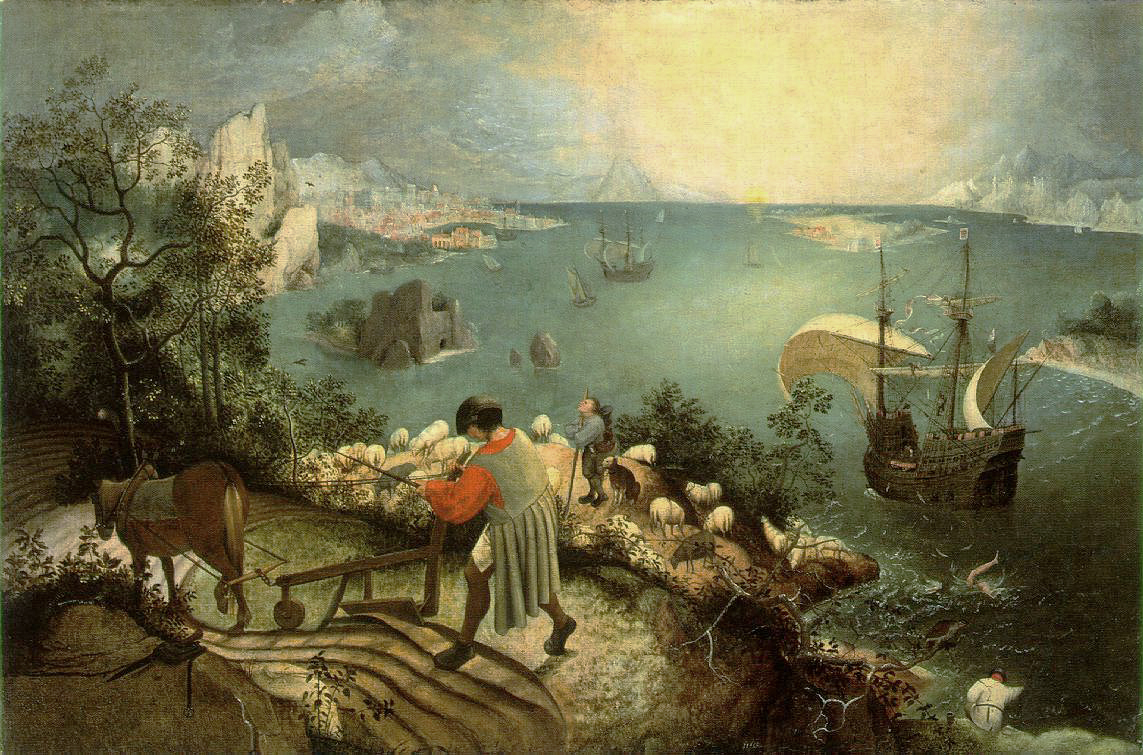
Bruegel,_Pieter_de_Oude_-_De_val_van_icarus_-_hi_res Over the last three decades Grid-group cultural theory, first devised by anthropologist Mary Douglas, has been used in a wide variety of disciplines. Here’s an example by David Low from 2008 of its use as:

‘a heuristic structure through which to view the diversity of university-community engagement and create shared understandings of the appropriateness of a wide range of possible engagement methods’.

What’s innovative about this is that it relates the four quadrants of grid-group analysis to the philosopher Charles S. Peirce’s ‘four methods of enquiry’.

But… as with most of these attempts at mapping two different conceptual schemes on to one another, I find myself questioning the methodological basis on which this is being done. Continue reading Mapping four-fold conceptual schemes onto Grid-Group Cultural Theory

Mary Douglas delivers the Terry Lectures 2003 in streaming audio

thinking-in-circles

In this series of four public lectures delivered at Yale University in October 2003, anthropologist Mary Douglas explains the thinking behind her work on ‘ring composition’. These are the lectures on which her book Thinking in Circles (Yale University Press) is based.

Writing in Circles: Ring Composition as a Creative Stimulus

Is God literally real?

3247937322_0f82afc8c1Philosopher A.C. Grayling writes about  the illiterate roots of religion.

The ‘roots’ of religion may be illiterate, but this is hardly a cogent argument since the roots of everything, including writing, are illiterate.

Further, it’s unhelpful to disparage illiteracy in a generalising way. Australian Aboriginal culture, for instance, has been ‘illiterate’ for most of its existence, yet is one of the high points of human achievement. Far from being ‘primitive’ as European theorists such as Durkheim claimed, it is highly advanced and has a highly advanced relationship with its environment. In a sense, country is the ‘text’ with which Aboriginal culture is ‘written’, or the page on which it is inscribed. Or rather, literacy in the sense we understand it is a pale shadow of its former glory (was it Socrates who thought writing was an inferior form compared with face to face discourse?). Continue reading Is God literally real?

Good Intentions: is rational choice the only choice?

A new book called Good Intentions proposes that Christians should stop judging economic matters on the basis of pre-conceived moral positions and start judging them on the basis of what actually works. A prime example is the debate about the minimum wage… Continue reading Good Intentions: is rational choice the only choice?

Virtual Goods and the Greatest Story ever Told


Virtual goods make money

In a recent post about the profitability of online social networks in the US, China and Japan, venture capitalist Bill Gurley presents evidence that the more financially successful social network sites are those that downplay advertising revenue and focus on revenue from virtual goods. He points out that Users in Second Life are doing $450m annually in this business and taking out of Second Life $100m a year.

But why would anyone buy them? Continue reading Virtual Goods and the Greatest Story ever Told

Room for One More on the Atheist Bus

The Battle of the Bus Adverts has begun in earnest. Now the Christians have taken up the challenge and responded with ads of their own, including the Russian Orthodox Church who, with tongue firmly out of cheek, produced ‘There IS a God’.

There is probably a geographical or cultural specificity to the effectiveness of these adverts. After all, one message probably wouldn’t play equally well in every city. So here’s a couple of suggestions for the atheist riposte, which is sure to come… any time now, depending on traffic conditions.

In New York:
HE’S JUST NOT THAT INTO YOU.

In Jerusalem:
TYPICAL – YOU WAIT AGES FOR ONE THEN THREE COME ALONG AT ONCE.

Any others – or is it all just too silly?

Grid-group cultural theory and hierarchical churches

The Gag WarehouseIt came to my attention recently that there are still churches which don’t let women preach or lead worship.

Choosing the leaders because they are men is a hierarchical approach to social organisation and needs to be set in a context. The other ways of choosing leaders should be noted:

Egalitarian – ‘priesthood of all believers’ (become more like the Quakers and be suspicious of activities that require structured leadership)

Individualist – ‘work out your own salvation’ (become more like the new age and construct your own tailor-made religion out of bought pieces. Leaders are entrepreneurs).

Fatalist – ‘the lot fell upon Matthias; and he was numbered with the eleven apostles’ (Acts 1.26) (become more like a lottery and embrace chance. After all, leadership is pointless –  who remembers what Matthias ever did?) Continue reading Grid-group cultural theory and hierarchical churches

Is it misleading to say there probably isn’t a God?

The Atheist Bus Campaign story just keeps rolling along.

The latest is that after more than 400 complaints, the UK’s Advertising Standards Authority is considering an investigation.

Meanwhile in Australia no such problems have been encountered, since the advertising industry is already censoring itself by refusing to work with anti-God ads.

mithras-westminster-museum-chester

It seems the ASA may be putting itself in the unenviable position of ruling on whether the claim that ‘There’s probably no God’ is misleading. To help the process along I can definitively advise that there is in fact a God in England and he has been located  in Oxford, York, Manchester, London and Chester (see image), as well as at a number of places in Northumbria. This is obviously bad news for atheists, but it may be equally bad news for Christians, Jews and Muslims. The God in question is none other than Mithras, the subject of a popular ancient Roman mystery cult. In fact, evidence of his existence is to be found all over western Europe.

Paganism was banned in 341, but London’s Mithraic temple is due to be re-established by developers in 2009.

There is a serious point to this: by denying a certain type of god, contemporary Atheists risk lending that god some backhanded credibility.