Still arguing about the facts on climate change?

Geologist Ian Plimer, who has written a book opposing the idea of human-made climate change, has backed out of a debate on the science with journalist George Monbiot.

But wait a minute. Actually, journalist George Monbiot, who has written a book supporting the idea of human-made climate change, has backed out of a debate on the science with geologist Ian Plimer.

Does this mean they’ve both backed down? Or does it mean they’ve both courageously stood their ground?

What’s going on?

From one perspective, Plimer is peddling ‘24 carat bafflegab’. From another, Monbiot is preaching a ‘secular religion’ and is the high priest of global warming.

Who’s right? Surely, when it comes to scientific facts, ‘Truth is truth to the end of reckoning’  (Shakespeare, Measure for Measure, Act 5 scene i). Why can’t these people just agree? And why can’t we get to the bottom of why they can’t agree? It’s as though they can’t even agree on what the facts are they’re supposed to be disagreeing about. Each seems to operate as though no matter what is said, the other will twist it to their own advantage because they are acting in bad faith.

If these people would take a look at the claims of Grid-group cultural theory, Continue reading Still arguing about the facts on climate change?

The financial crisis: Why did no-one see it coming, and why did economists get it so wrong?

Why didn’t the experts see it coming?, asked the Queen of England, and the British Academy wrote a letter to explain. Of the lead up to the global financial crisis they wrote:

“It is difficult to recall a greater example of wishful thinking combined with hubris.”

Meanwhile, economist Paul Krugman asked a similar question – how did economists get it so wrong –  and came up with an answer to do with the difference between salt water and fresh water (apparently one turns you Keynsian and the other turns you neo-classical). Krugman noted the failure  of neoclassical economics to account for the apparent irrationality of the market, and proposed as a remedy the emerging sub-discipline of behavioural economics.

When it comes to the all-too-human problem of recessions and depressions, economists need to abandon the neat but wrong solution of assuming that everyone is rational and markets work perfectly.

Both these approaches – that of the British Academy highlighting wishful thinking and hubris, and that of behavioural economics highlighting cognitive biases – make the great mistake of assuming that there is a single ‘ideal’ rationality,which real humans happen to be incapable of attaining. Continue reading The financial crisis: Why did no-one see it coming, and why did economists get it so wrong?

Beware – Dangerous Robots!

Dan Kahan of the Cultural Cognition Project has been thinking about the possible ways of reacting to robots that kill. It’s a relatively new set of technologies, but what happens when AI merges with weaponry to produce robots that want to kill you? He thinks the arguments could go in several ways and I tend to agree.

The ethics of this is already being worked out, with the aim of making robots behave ‘more humanely than humans’. There is a summary.

The title of a key book on the subject points to the potential contradictions:

Governing Lethal Behavior in Autonomous Robots

Governance is great – as long as we’re the ones in charge

The context in which all this is happening is an Hierarchical one: the so called military-industrial complex. Hence the great significance of the term ‘Governing’. For Hierarchy, governing is exactly the correct response to ‘lethal behavior’ – and this applies to all lethal behaviour, not just that of robots, who in a sense are nothing special. The point is, in the Hierarchical worldview violence is warranted, provided it is clear who is doing the warranting. But lethal robots present something of a problem. What happens if they aren’t programmed to be ‘governed’? Continue reading Beware – Dangerous Robots!

How do we know what we think we know? (part 2)

How do we know the tide won’t wash the beach away?

A couple of years ago a local newspaper reported a certain beach-front resident claiming  “It’s ridiculous to think this beach would ever get washed away by a king tide. I’ve lived here four months and it’s just never happened.” This is an example of an heuristic in operation. The particular heuristic the resident used was this: anything that hasn’t happened within the last four months will never happen. Clearly, it’s a deficient way of thinking (parts of the beach have in fact been washed away), but might there be heuristics that, though not infallible, are useful?

This post follows on from one a while back about how we know what we think we know about ‘how things really are.’ I’m seeking to develop a way of characterising grid-group cultural theory as a set of four ecologically efficient social learning heuristics.

Given that we don’t actually know how stable the beach is, or indeed anything much about how things really are:

We use heuristics… Continue reading How do we know what we think we know? (part 2)

A visual summary of Grid-group cultural theory

Service designer Nick Marsh has created a nice visual summary (of Matthew Taylor’s summary) of grid-group cultural theory

Nick writes:

The really interesting thing about this way of looking at culture is that it provides us with an off balance, high tension way of thinking about competing agendas and arguments in situations where there is no ‘right’ solution, only better or worse outcomes for different groups (sometimes referred to as Wicked Problems within the design community.)…
Cultural Theory is thus a tool to be used when tackling problems, more than a theory to explain a situation, and this is the appeal for me as a service designer – I’m always looking for ways to frame the often complex and contradictory problems I come across during my work, and Cultural Theory is an inspiring, thought provoking method of viewing these issues. I’m looking forward to reading more about it…

Do Egalitarians need Spirituality?

A thoughtful review by Graham Strouts of David Holmgren’s new book, Future Scenarios appears at his website, Zone 5.

This provides an interesting angle on the predeliction of Egalitarian thinkers to foreground the need for a ‘reorientation of spiritual values’ or a ‘fundamental change of paradigm’. Note that while Holmgren himself is clear that under certain scenarios such social changes are essential, not every Egalitarian is in agreement. One of the issues with advocating a return to spirituality is the question, Which spirituality? Continue reading Do Egalitarians need Spirituality?

On the Meaning of Culture

Grid-Group Cultural Theory is an uncomfortable thing to live with. It claims that our rationality is partial rather than complete. Instead of one version of common sense, which sensible people have and stupid people ignore, there are actually four competing versions of rationality, four different takes on the way the world actually is. Although we are quite flexible, we spend much of our time stuck inside one or other of these four boxes, unable or unwilling to see anything beyond the walls of the box.

In The Meaning of Culture (1929) John Cowper Powys wrote:

Culture is what is left over after you have forgotten all you have definitely set out to learn…One always feels that a merely educated man holds his philosophical views as if they were so many pennies in his pocket. They are separate from his life. Whereas with a cultured man there is no gap or lacuna between his opinions and his life. Both are dominated by the same organic, inevitable fatality. They are what he is.

Technology publisher Tim O’Reilly sees this as a strength, since it’s part of what gives an individual or an organisation a personality.

“Great companies always have this sense of authenticity, while “me too” companies have a culture made up of the latest management fashions.”

But it can also be a great weakness. Having matched one’s opinions to one’s life and one’s life to one’s opinions it then becomes next to impossible to see the life that exists beyond the opinions, or the opinions that exist beyond the life.

Powys nicely put his finger on exactly the point that Cultural theory seeks to expose: the point at which we abandon our ideas of opinion or philosophy and resort to the claim that ‘this is how the world really is’.

Cultural theory might therefore be regarded as an antidote to cultural inevitability, because it claims that no matter how comprehensive a particular cultural milieu appears to those on the inside, three quarters of the world is always on the outside, waiting to be discovered. Furthermore, it provides a map for navigating this expansive, meta-cultural territory. And like all maps it confronts us with a crucial question: is this organic or is it constructed?

Now read:
A way of trying not to fool yourself

Mapping four-fold conceptual schemes onto Grid-Group Cultural Theory

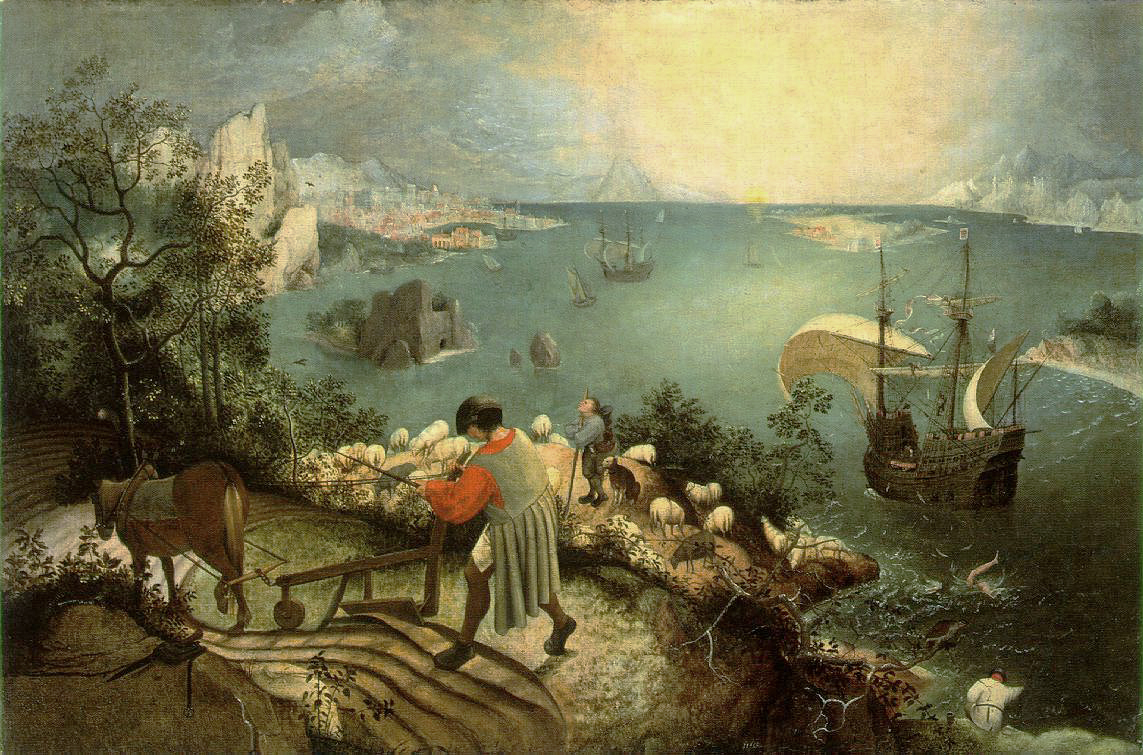
Bruegel,_Pieter_de_Oude_-_De_val_van_icarus_-_hi_res Over the last three decades Grid-group cultural theory, first devised by anthropologist Mary Douglas, has been used in a wide variety of disciplines. Here’s an example by David Low from 2008 of its use as:

‘a heuristic structure through which to view the diversity of university-community engagement and create shared understandings of the appropriateness of a wide range of possible engagement methods’.

What’s innovative about this is that it relates the four quadrants of grid-group analysis to the philosopher Charles S. Peirce’s ‘four methods of enquiry’.

But… as with most of these attempts at mapping two different conceptual schemes on to one another, I find myself questioning the methodological basis on which this is being done. Continue reading Mapping four-fold conceptual schemes onto Grid-Group Cultural Theory

Niche construction: what does it tell us about culture?

Meika recently posted a comment on this site, highlighting the concept of niche construction as a driver of evolution.
I found it fascinating, which, partly is why it’s taken me so long to respond. (The other reason is a total computer melt down). Anyway, I’m intrigued with the niche construction material, which I hadn’t come across. I’d agree with the authors of the book that this area is worthy of greater study, but can’t help wondering whether it really does constitute a new way of looking at evolution… Continue reading Niche construction: what does it tell us about culture?

On the relationship between behaviour and context in Cultural Theory

In reply to Matthew Taylor’s  question over at his RSA blog:

“how can it be true both that there are some social environments which encourage particular attitudes and behaviours (which could be said broadly to fit an egalitarian outlook) while, at the same time, in relation to any specific problem or decision, a set of conflicting responses (of which egalitarianism is only one) will emerge?”

1) Scale is crucial. Just as there isn’t a single rationality but four, neither is there a single scale. At one scale of operation, one of the four cultures may be dominant, and may seem to be a good fit with the landscape, but at other scales other cultural biases may be a better fit. See the work of ecologist Buzz Holling on this.

2) Similarly, time is also crucial. The social-ecological model of Holling and others in the Resilience Alliance suggests that ecological succession has a social counterpart. What appears optimal at one moment will become less optimal as time changes the environment, so that alternative problems arise, leading to alternative solutions and alternative institutions.

3) The ability to defect is also crucial. I have been quite taken with a cellular automata problem called the density classification problem. In short this seems to suggest that even in simple mechanistic systems, total knowledge is impossible. This means there is always room for the dominant answers to be wrong and for defectors from the main view to get it more nearly correct. Given that a) social-ecological systems are far more complex than cellular automata and b) evolution has fine-tuned human responses to problem solving, it seems possible that human society is an environment which rewards a dominant viewpoint without punishing too severely a minority of dissidents.