Beyond the Culture of Discipline: What makes a Great company and how Cultural Theory can help

D. Douglas Caulkins, an anthropologist at Grinnell College, Iowa, has used Grid-Group Cultural Theory to appraise and extend Jim Collins’ well known work on organisational culture, Good to Great (which is explained at http://www.jimcollins.com and about which you can read an article. )

Abstract
Jim Collins’s empirical study Good to Great: Why Some Companies Make the Leap … and Others Don’t (Harper Business, New York, 2001) has made a worldwide impact on management and leadership practice and research. His concept of “culture of discipline” is central to his ideas for achieving enduring, sustainable organizations, whether in the business or nonprofit sectors. In this essay the culture of discipline is re-theorized in the context of Mary Douglas’s grid-group analysis to provide a home within a broader theory which will locate the culture of discipline in relation to alternative cultures. The framework is illustrated with applications in a study of small, high-technology firms in peripheral areas of the UK, leading to the recognition of an organizational form missing from most of the management literature and furthering the exploration of a model of humble and collaborative leadership as an alternative to the model of charismatic or heroic leadership growing out of American management culture.

[Image credit: Woodleywonderworks]

Prof Caulkins has done a very good job of this. Caulkins’ approach is to equate the ‘great company’, with its long-termism and its culture of responsibility, with the Egalitarian bias of Cultural Theory. If this is so, Collins could be said to achieve this without at any point scaring American business leaders off by sounding like some kind of cheerleader for socialism. To recognise this strand in American business thinking is to call into question the easy assumption that the typical American approach is Individualist. Continue reading Beyond the Culture of Discipline: What makes a Great company and how Cultural Theory can help

How to be a better tipper: Learning and working the four cultures of tipping

Are you one of those people who are never quite sure whether it’s appropriate to leave a tip, or is it always quite obvious to you? What about when visiting a different country? Do you rely on the tipping section of your guidebook, or do you figure that since you’ll be leaving tomorrow you can freeload and leave nothing? Have you ever insisted on giving a tip and found this insistence offended your hosts, or have you had the opposite experience of offending by walking straight out? Perhaps like Nigel Richardson, trying to get it right leaves you ‘feeling like a chimp at the Ritz’.

Do you understand tipping culture, or is it all just too subtle?

[Image credit: Marcin Wichary]

In the forty-odd years it has been around Grid-group cultural theory has been used to cast light on many kinds of social interaction, and this year it has been applied to the sometimes fraught process of tipping. Continue reading How to be a better tipper: Learning and working the four cultures of tipping

The beetroot lesson – the politics of disgust

beetroot

Martha Nussbaum has recently written a second book on the connections between visceral feelings of disgust and more abstract responses of indignation. As one commentator put it:

‘disgust can’t be reasoned with. Logical arguments do not make spoiled milk smell better.’

[Image: Darwin Bell]

I think this is precisely wrong. As a child I hated beetroot with a passion. But I convinced myself that if someone in the world liked it there must be something to like. After persisting, I found I not only liked beetroot – I loved it, and still do to this day. Happily the first time I tasted an olive I remembered the beetroot lesson and all was well. As it turns out, disgust can be reasoned with. And further, logical arguments do in fact make spoiled milk smell better. Here’s my logical argument: it’s sour cream. Continue reading The beetroot lesson – the politics of disgust

The meaning of culture

When Glasgow won the honour of hosting the 1990 European City of Culture festival the joke was, Culture? Isn’t that what we’ve got growing on our walls? (from memory,  this was Rab C Nesbitt’s contribution). It wasn’t far off the mark though. I interviewed an amazing woman, Cathy McCormack, who had successfully campaigned for a medical and, yes, cultural recognition that the mould growing in council houses was a contributing factor to Glasgow’s high incidence of heart disease, and that therefore, it shouldn’t be assumed that people with heart disease had brought it upon themselves by eating a poor diet (deep fried mars bars and pizzas notwithstanding).

So culture can mean different things depending on context. I rather like Edgar Schein’s description (1991: 111):

‘Culture can now be defined as a pattern of basic assumptions, invented, discovered, or developed by a given group, as it learns to cope with its problems of external adaptation and internal integration, that has worked well enough to be considered valid and, therefore is to be taught to new members as the correct way to perceive, think, and feel in relation to those problems’.

That’s certainly neat, but it’s not necessarily straightforward. I’ve previously mentioned here the meaning of culture, and it should be noted that a well-known study by Kroeber and Kluckhohn (1963) identified 164 unique definitions of the term ‘culture’, while van der Post et al. (1997) listed more than 100 dimensions and according to Ott (1989) there were 74 elements of organisational culture. Continue reading The meaning of culture

Ten Thousand Views of Fourcultures

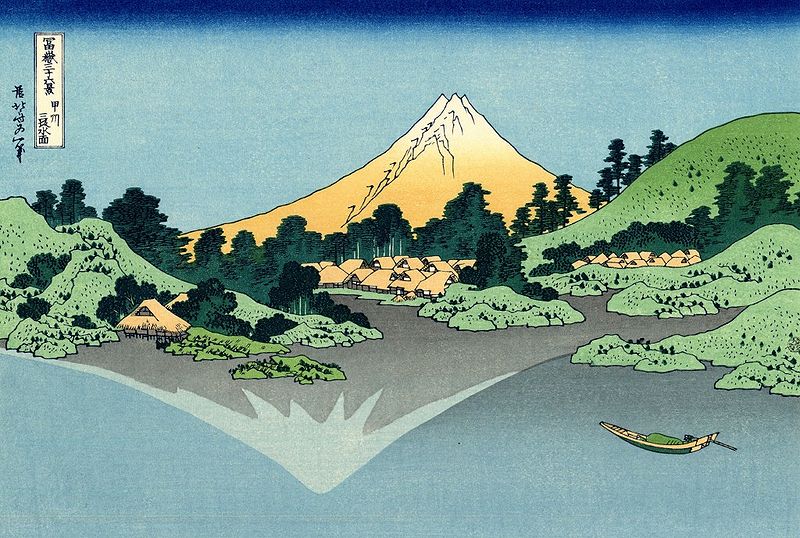
More views than Mount Fuji!

Quite unheralded, this website has achieved a small milestone. Yes, one of you kindly gave Fourcultures its ten thousandth view. If Fourcultures mentioned popular blog-friendly things, this would clearly be extremely small-beer, but since we focus on Grid-Group Cultural Theory, it’s an achievement of sorts… Thanks for reading and commenting. Here’s to the next ten thousand.

Flaw in the model

Alan Greenspan found a flaw in the model. What happens when you find a flaw in yours? Do you keep going with the old model as long as you can, right up to the point at which you experience your own local equivalent of the global financial crash? Or do you somehow try to extricate yourself from the model and defect from your own point of view? This second possibility is clearly much harder than just keeping on going, but then it might also be, in the long run, less damaging.
Let’s face it, Greenspan didn’t ‘find’ a flaw – the flaw was foisted upon him by events spiralling out of his control. Had he queried himself sooner, the rest of us might have been less impacted by his last minute flaw-finding.
Churchill is supposed to have said ‘There is nothing wrong with change, if it is change in the right direction. To improve is to change; to be perfect is to have changed often.’
So how do we do it – how do we defect from our own framework of thought? Continue reading Flaw in the model

How to deviate from climate change destruction – the case of the Great Barrier Reef

A confession: I visited the Great Barrier Reef a couple of years ago and it was the most stunning experience of my life. The beauty, intricacy, diversity, were amazing. The experience of immersion in this underwater world was and is vivid – literally alive. But I felt profoundly uneasy participating iin the industrial system that got me there – plane flight, chain hotel, large, fast motor boat. In order to appreciate the beauty of what we’re destroying we need to destroy it a little bit more, it seems.
Environmental writer Chris Turner addresses this dilemma head on in a marvellous piece for Canada’s Walrus Magazine, The Age of Breathing Underwater.

Justice cannot be done to the piece here – you need to read it for yourself. He focuses on the work of Australian coral expert Dr Charlie Veron, author of A Reef in Time, who, as Turner tells it, fights to save the Reef, even as he affirms it cannot now be saved. Ocean acidification has gone too far already. What lies in the human heart on the far side of hope is the subject, then, of Turner’s article.
If you’ve read more than one post on this website you’ll be expecting an anaylsis of the social structures that condition such thinking in terms of a model of society called Grid-Group Cultural theory. It’s true there is ample scope for this. For example, when Veron likens ocean acidification to a loaded gun with ‘a hair trigger and devastating firepower’, he’s indulging in classic Egalitarian-speak which ought to call into question his construction of the facts (by etymology if not by modern definition facts are always constructions: facere = to make). This is not at all to deny that acidification is taking place, but to scrutinise the human meanings we assign to it. But this time I want to do something a little different. This time I want to write in terms of deviance Continue reading How to deviate from climate change destruction – the case of the Great Barrier Reef

Why Psychology fails to explain the Global Financial Crisis

Listening to Australian historian Robert Mann’s recent lecture at the Melbourne Writers’ Festival on whether neo-liberalism has a future, I was struck by the deficiency of the rush to psychological explanation. In seeking to analyse the supposed inadequacies of the free-market ideology, there is an increasing tendency to rely on psychology as the master discipline, the new ‘commmon sense’ that will unlock the secrets of collective human behaviour. Just as the neo-liberals championed the perfectly rational economic actor, homo economicus, who as an individual is unrecognisable from any other perfectly rational individual, so the latest commentators attempt to correct and complete the picture by pointing out that this vision misses out humanity’s essential irrationalism, epitomised by a host of psychological quirks – which set the bounds for Kahneman and Tversky’s bounded rationality. But whether for or against the unfettered free market, these supposedly conflicting approaches share much more than they disagree on: namely a confidence that what goes on in our heads is what it’s all about. Continue reading Why Psychology fails to explain the Global Financial Crisis

Why do we disagree about Climate Change?

In his foreword to a recent collection on the social construction of climate change, Nicholas Onuf writes:

‘As a social constructon, climate change is no one thing. Instead it is an ensemble of constitutive processes, yielding an ever changing panoply of agents and insitutions, fixed in place only for the moment.’ Mary E Pettenger (ed) 2007:xv

Yet in the arguments about climate change, the subject of the arguments is often taken as a given. We forget that just as the carbon dioxide emissions are of human origin, so is the very concept.

Now Prof Mike Hulme, founder of the Tyndall Centre for Climate Change Research, has written a book about climate change as a social, cultural, political, religious and ethical phenomenon,rather than a ‘problem’ to be ‘solved’. In doing so he has drawn deeply from the well of Cultural Theory. The book refers repeatedly to the writings of Mary Douglas (especially Douglas and Wildavsky 1984), Michael Thompson (particularly Verweij and Thompson 2006) and numerous other cultural theorists, and has a Foreword by Steve Rayner. The book is much too stimulating and multi-faceted to summarise here, but in terms of policy implications the auther promotes Rayner’s idea of the need for ‘silver buckshot’ rather than ‘silver bullets’, and Verweij and Thompson’s idea of ‘clumsy solutions’ rather than elegant failures.

I’ve written from a similar perspective about climate change, and specifically on what we argue about when we argue about global warming.

Why we Disagree about Climate Change is a timely, wide ranging thoughtful and challenging contribution to the climate change debate. I think it will also stand as a highly accessible landmark text of ‘applied Cultural Theory’, much as Christopher Hood’s 1998 book on public management did a decade ago.  A review will follow.

The decline and fall of declining and falling

Edward Gibbon made a famous claim in chapter 3 of The History of the Decline and Fall of the Roman Empire that

“If a man were called to fix the period in the history of the world, during which the condition of the human race was most happy and prosperous, he would, without hesitation, name that which elapsed from the death of Domitian to the accession of Commodus.”

Not many people these days would be able to do this kind of thing ‘without hesitation’ (“ Oh, yes, 96 to 180AD, I remember it well…”), but Gibbon makes a good point: we organise our lives around a concept of human happiness and prosperity. It’s very important to us both within our national economies and or household economies to know whether things are getting better or worse, and whether this trajectory, once identified, is ‘normal’ or ‘exceptional’.

Gibbon’s intuitive opinion, ‘without hesitation’ was not only that happiness and prosperity were getting worse but that this had been the normal state of the world for a period of roughly 1600 years since the end of the Roman Empire. The former view was somewhat tempered by the latter. Since decline amounted to a long-term trend, it was nothing much to get excited about.

The industrial revolution made Gibbon’s historical reconstruction with its mood of nostaligia seem ‘ridiculous’ (J.C. Stobart). Not at first, since the dark satanic mills actually produced a decline in life expectancy, at least until roughly the middle of the 19th century. But it transformed the way people in England regarded the Golden Age. Now, with new and wondrous inventions appearing seemingly every year, it was increasingly obvious that the best was yet to come, not in the afterlife, as previously, but in the here-and-now or, to be precise, the here-and-soon. We are still living in this brave new world of constant progress and the pace of fabulous change continues to increase. Continue reading The decline and fall of declining and falling