Fourcultures – the most popular posts of 2009

Many thanks to everyone who’s read these pages over the year that’s now ending. Fourcultures is now being read more than 2,000 times a month.

And just in case you missed them, the most popular posts of 2009 are as follows:

The Four Cultures of Marketing Ethics
Grid-Group Cultural Theory: a way of trying not to fool yourself
Post-Secular Artist? Nine Reflections on Patrick Heron
Four Ways to Make Social Change Work Better
How to be a Fatalist

Here’s to 2010. Happy New Year!

Which of my identities takes precedence?

Mort recently asked the following:

Where does cultural cognition reside?Is it within the individual or their cultural environ – the social assumptions and influences that we are surrounded by?
Which of my identities takes precedence, me the autonomous decision maker, or me the social role?

Thanks for reading and for your encouragement Mort. I think your question is very important. Much of our discussion about human interaction assumes the basic unit is the individual, somehow isolated from their environment. Economics has been particularly successful at describing the world in terms of the utility-maximising rational individual. Psychology has progressed on the assumption that much of what matters about human behaviour is to be found inside individual brains. As a broadly sociological theory , though, Cultural Theory is compatible with the sociological idea that the basic unit of study is not the individual alone, but the person-in-relationship. In other words it is held that what is distinctive is our connections, that without taking account of my context I can hardly make sense of ‘me’. For a long time this was problematic – there were many debates about the relative significance of ‘structure’ (the context) and ‘agency’ (the actions of people in, and sometimes in spite of, that context). Anthony Giddens’ structuration theory was just one of many attempts to connect the vision of the individual with the vision of the social. Most were rather unsatisfactory. A few changes in the last decade or so have shifted these debates quite dramatically.
First there is the rise of social network theory. This studies the links between people and has lately grown in importance. You can see that if you study the links you no longer ask ‘is it the individual or the group that matters?’ Studying the ties, the relationships, tells us something about both the groups and the individuals that we wouldn’t have grasped otherwise.
Second, there is the rise of evolutionary psychology. This argues that some of what we previously took to be humans making choices about their circumstances can actually be explained in biological terms. But note that just as it takes some of the explanatory power away from ‘society’, it also offers new scope for social factors to be influencing biology, for if adaptation is a key mechanism, then the environment of evolutionary adaptedness is a central consideration.
Third, sitting within this biologocal turn, but worth noting in its own right is the advance of game theory. This has shown that mechanisms other than genetic heredity and mutation can impact on evolution. Games are entirely social/relational and not biological, and yet they have the capacity to influence biology through evolution.
Each of these frameworks of research is reconfiguring, sometimes quite radically, our ideas about what makes up the ‘individual’ and what makes up the ‘social’. Many of our ideas from the past are no longer viable and we are still coming to terms with this. But also, many of these new ideas are contested within their own fields and many issues are far from settled.
Grid-group cultural theory was developed before some of the importance of these big shifts became apparent and basically sits within what evolutionary psychologists like to to call the Standard Social Science Model (SSSM), which they challenge. My own view is that it can make a distinctive contribution. I am exploring the idea that the four cultures described by Mary Douglas, her collaborators and followers can be reframed as examples of ‘ecologically adaptive heuristics’ as described by psychologist Gerd Gigerenzer.

Further, as I have previously written:

there surely is an important and little understood link between the human and the natural sciences to which Cultural Theory may contribute something. I’m pretty certain it has something reasonably substantial to contribute to what Paul E Griffiths and Karola Stotz call ‘biohumanities‘. My hunch, further, is that grid-group cultural theory might be open to game-theoretical modelling, and that this would then offer something to evolutionary theory, in the way that Axelrod’s evolution of cooperation did. Specifically it might further develop some of the ideas of Brian Skyrms on the Stag Hunt and the evolution of culture.

There is a good summary of Douglas and Ney’s Missing Persons (1998), which points to some of this.

And since you mentioned coutural cognition, you should go straight to the fount of wisdom on this: The Cultural Cognition Project.

Fortify your group with religious belief! Homing in on the God Gene

NY Times God Gene Graphic“Groups fortified by religious belief would have prevailed over those that lacked it, and genes that prompted the mind toward ritual would eventually have become universal.”

An article in the New York Times, In Search of the God Gene, flies a kite for religion as an evolutionary benefit. But it takes a very particular view of what religion amounts to. According to the article the traits regarded as religion are those that promote a [high-group, low-grid]  egalitarian society, but then also those which favour a [high group, high grid] hierarchical society. However, the view that these cultures are the most effective and therefore the most likely to be selected for in evolutionary terms does not stand up to scrutiny. It begs the question of the relationship of nature to culture. Neither does it take account of the possibility raised by Cultural Theory of [low grid,  low group] Individualist, or [high grid, low group] Fatalist religions and religious practices.

No organised religion in the world today is claimed to have lasted more than 40,000-60,000 years. Most are far, far younger than this. Indeed we could characterise religion itself as a very recent phenomenon, far too recent to have affected evolution to any significant extent. Supposedly timeless ‘Religious’ practices such as ritual dancing or induced trance states are so general as to transcend any useful definition of religion, or else not actually necessary for a definition of religion.

The evidence cited in the article itself contradicts the claim that religion helps societies to survive over generations. Note that far from being static, the religious activities identified in the NY Times article change and involve discontinuity. Communal religious dancing floor, ancestor cult shrine, astronomical temple – it is our modern category of religion that links these structures, not the experience of those societies which changed, perhaps drastically, from one to the next. What seems to be selected for, if that is the right term, is the ability of humans to abandon their religious beliefs and practices and adopt different ones, often radically different ones. Apostacy seems to be the intergenerational norm, and even loyalty as the intra-generational norm can take a big hit from time to time. Letters of reply to the article were interesting, with some supporting the alternative view that religion is a byproduct of evolution, not a factor, and others pointing out that many ethically questionable human behaviours can be seen as adaptive.

Do genes drive culture? New developments in culture-gene coevolutionary theory

A recently published  research paper lends support to the idea that genes and culture influence one another mutually, effectively co-evolving. A link has been proposed between the collectivism-individualism scale of national cultures and a gene that affects the supply of seratonin to the body, the seratonin transporter gene 5-HTTLPR. A media-friendly summary of the research is available. On the background to biocultural anthropology see Bindon (2007).

The method used for measuring culture is interesting and fairly well documented (Hofstede 2001; Hofstede and McRae 2004). The individualism-collectivism scale is similar to the ‘group’ dimension in Grid-Group Cultural Theory.

This leads to a number of questions:

  1. If 5-HTTLPR can be seen as a ‘group’ gene (i.e. its prevalence is correlated with a communal rather than individual culture), does this mean we should now be looking for a ‘grid’ gene, to confirm or deny the typology of Cultural Theory? To be specific, the individualist-collectivist scale only allows for one type of collectivist culture (ie. collectivist) whereas from a Cultural Theory perspective there is clearly more than one basic type, namely Hierarchical collectivism (high grid) and Egalitarian collectivism (low grid). It is hard to say prima facie that these two types are so similar to one another that no further distinction needs to be made. The same goes for the two types of individualist cultural bias, Fatalist (high grid) and Individualist (low grid).
  2. Or, if the group dimension needs to be augmented with the grid dimension, what does this mean for the results of a study that claims to have described regional cultures in terms of only one dimension? It was anthropologist Mary Douglas’s claim that the group dimension, individualism-collectivism, was not on its own enough to describe cultural biases, and that a fourfold typology was necessary. If this is so, we could hypothesise that in the seratonin study, there will be interference caused by the unexamined ‘grid’ dimension, that needs to be controlled for, or otherwise accounted for.
  3. The argument of the paper is strongly functionalist. That is, culture is seen to have a clear function in relation to the mental health and genetic makeup of individuals, and reciprocally, genetic makeup is seen to have a function in relation to mental health within its cultural context.  This seems to have implications for the ways in which Grid-group cultural theory might develop in engagement with genetic and other biological studies of this kind.
  4. The paper also accepts fairly uncritically the claim of ‘cultural consonance’, that where individuals, in their own beliefs and behaviours, conform to widely shared cultural models, there is a lower incidence of psychological distress (Dressler et al. 2007). I’m concerned about the normative implications of such a claim, that cultural consonance (and possibly cultural conformity) might be seen as desirable because it reduces psychological distress. This contrasts with, for instance, Robert K Merton’s views of deviance, in which besides conformity, innovation, ritualism, retreatism and rebellion are alternative was of engaging with cultural norms and goals.

References

Bindon, James R. (2007). “Biocultural linkages — cultural consensus, cultural consonance, and human biological research”. Collegium Antropologicum 31: 3–10.

Joan Y. Chiao and Katherine D. Blizinsky
Culture–gene coevolution of individualism–collectivism and the serotonin transporter gene Proc. R. Soc. B published online before print October 28, 2009, doi:10.1098/rspb.2009.1650

Dressler, William W., Mauro C. Balieiro, Rosane P. Ribeiro and José Ernesto Dos Santos (2007) Cultural consonance and psychological distress: examining the associations in multiple cultural domains. Culture, Medicine and Psychiatry, Volume 31, Issue 2, 195 – 224.

Hofstede, G (2001) Culture’s Consequences: Comparing values, behaviors, institutions and organizations across nations. Thousand Oaks, CA: Sage Publications.

Hofstede, G. & McCrae, R. (2004) Personality and culture revisited: linking traits and dimensions of culture. Cross-Cult. Res. 38, 52–88.

#approvalmatrix – fourfold typologies make it to Twitter

Here’s an older post from the Savage Minds anthropology blog about Mary Douglas’s grid-group typology (the basis of the four cultures explored on this site). It’s basically a mashup of that typology and an alternative scheme deriving from Pierre Bourdieu (if he wrote for the New York Magazine, that is): highbrow/lowbrow; brilliant/despicable.

I like it because I’ve been very interested in the proliferation of fourfold schemes in the social sciences – and here’s another one. In particular I’m interested in whether these schemes are each as radically new as the author or creator always seems to think, or whether there’s some kind of underlying structure that makes superficially different formulations somehow connect.

This particular juxtaposition reminds me of Arthur Koestler’s understanding of creativity, which comes about where

‘a single situation or idea is perceived in two self-consistent but mutually incompatible frames of reference’.

If you’re interested, the approval matrix has been re-purposed and applied to Twitter posts at O’Reilly Radar.

Koestler, Arthur (1964) The Act of Creation. London: Pan. Quoted in William Byers (2007) How Mathematicians Think. Using Ambiguity, Contradiction and Paradox to Create Mathematics. Princeton and Oxford: Princeton University Press, 28.

How to be a better tipper: Learning and working the four cultures of tipping

Are you one of those people who are never quite sure whether it’s appropriate to leave a tip, or is it always quite obvious to you? What about when visiting a different country? Do you rely on the tipping section of your guidebook, or do you figure that since you’ll be leaving tomorrow you can freeload and leave nothing? Have you ever insisted on giving a tip and found this insistence offended your hosts, or have you had the opposite experience of offending by walking straight out? Perhaps like Nigel Richardson, trying to get it right leaves you ‘feeling like a chimp at the Ritz’.

Do you understand tipping culture, or is it all just too subtle?

[Image credit: Marcin Wichary]

In the forty-odd years it has been around Grid-group cultural theory has been used to cast light on many kinds of social interaction, and this year it has been applied to the sometimes fraught process of tipping. Continue reading How to be a better tipper: Learning and working the four cultures of tipping

The beetroot lesson – the politics of disgust

beetroot

Martha Nussbaum has recently written a second book on the connections between visceral feelings of disgust and more abstract responses of indignation. As one commentator put it:

‘disgust can’t be reasoned with. Logical arguments do not make spoiled milk smell better.’

[Image: Darwin Bell]

I think this is precisely wrong. As a child I hated beetroot with a passion. But I convinced myself that if someone in the world liked it there must be something to like. After persisting, I found I not only liked beetroot – I loved it, and still do to this day. Happily the first time I tasted an olive I remembered the beetroot lesson and all was well. As it turns out, disgust can be reasoned with. And further, logical arguments do in fact make spoiled milk smell better. Here’s my logical argument: it’s sour cream. Continue reading The beetroot lesson – the politics of disgust

The meaning of culture

When Glasgow won the honour of hosting the 1990 European City of Culture festival the joke was, Culture? Isn’t that what we’ve got growing on our walls? (from memory,  this was Rab C Nesbitt’s contribution). It wasn’t far off the mark though. I interviewed an amazing woman, Cathy McCormack, who had successfully campaigned for a medical and, yes, cultural recognition that the mould growing in council houses was a contributing factor to Glasgow’s high incidence of heart disease, and that therefore, it shouldn’t be assumed that people with heart disease had brought it upon themselves by eating a poor diet (deep fried mars bars and pizzas notwithstanding).

So culture can mean different things depending on context. I rather like Edgar Schein’s description (1991: 111):

‘Culture can now be defined as a pattern of basic assumptions, invented, discovered, or developed by a given group, as it learns to cope with its problems of external adaptation and internal integration, that has worked well enough to be considered valid and, therefore is to be taught to new members as the correct way to perceive, think, and feel in relation to those problems’.

That’s certainly neat, but it’s not necessarily straightforward. I’ve previously mentioned here the meaning of culture, and it should be noted that a well-known study by Kroeber and Kluckhohn (1963) identified 164 unique definitions of the term ‘culture’, while van der Post et al. (1997) listed more than 100 dimensions and according to Ott (1989) there were 74 elements of organisational culture. Continue reading The meaning of culture

Ten Thousand Views of Fourcultures

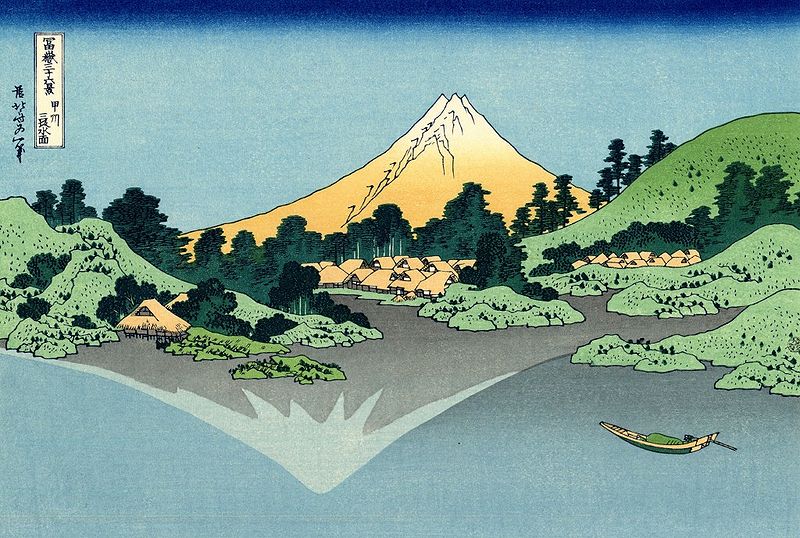
More views than Mount Fuji!

Quite unheralded, this website has achieved a small milestone. Yes, one of you kindly gave Fourcultures its ten thousandth view. If Fourcultures mentioned popular blog-friendly things, this would clearly be extremely small-beer, but since we focus on Grid-Group Cultural Theory, it’s an achievement of sorts… Thanks for reading and commenting. Here’s to the next ten thousand.

Flaw in the model

Alan Greenspan found a flaw in the model. What happens when you find a flaw in yours? Do you keep going with the old model as long as you can, right up to the point at which you experience your own local equivalent of the global financial crash? Or do you somehow try to extricate yourself from the model and defect from your own point of view? This second possibility is clearly much harder than just keeping on going, but then it might also be, in the long run, less damaging.
Let’s face it, Greenspan didn’t ‘find’ a flaw – the flaw was foisted upon him by events spiralling out of his control. Had he queried himself sooner, the rest of us might have been less impacted by his last minute flaw-finding.
Churchill is supposed to have said ‘There is nothing wrong with change, if it is change in the right direction. To improve is to change; to be perfect is to have changed often.’
So how do we do it – how do we defect from our own framework of thought? Continue reading Flaw in the model